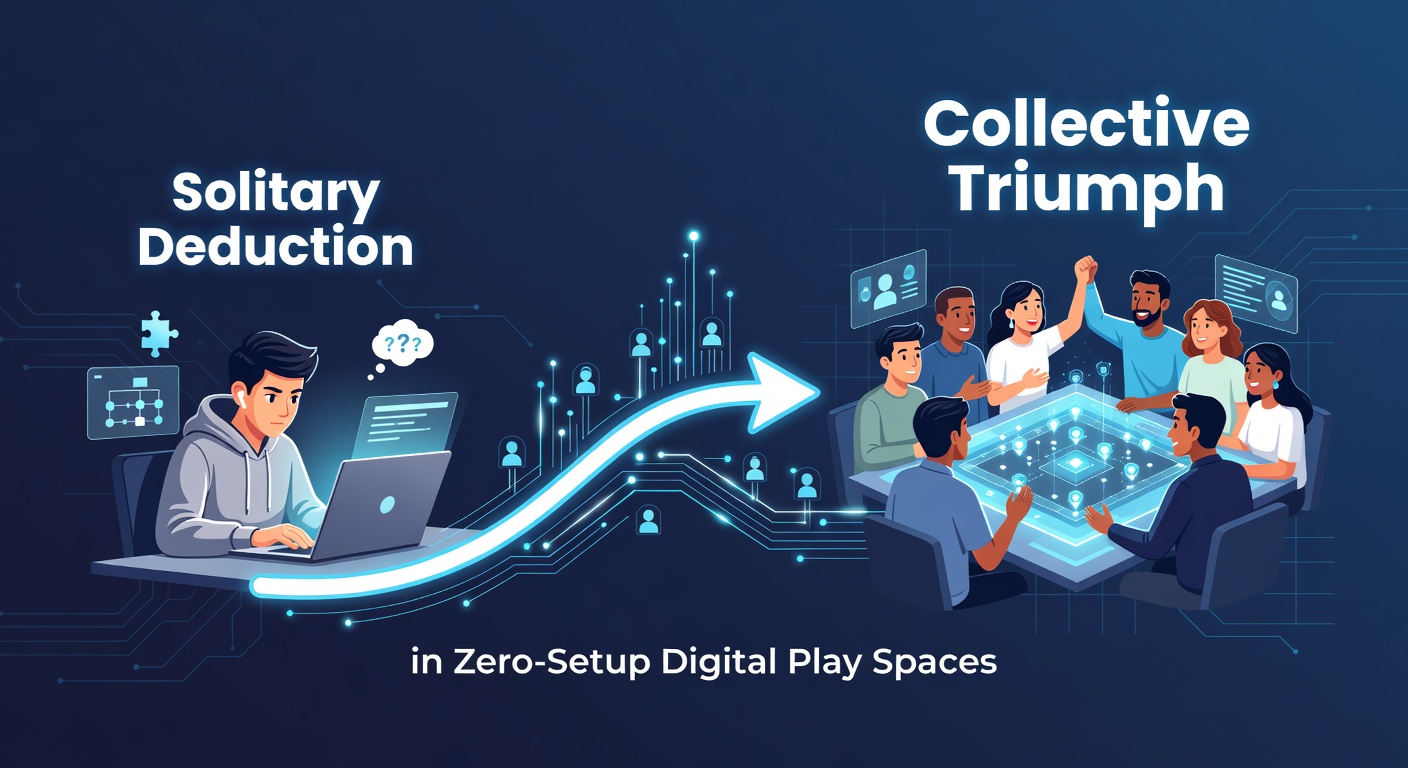
Tracing the Path from Solitary Deduction to Collective Triumph in Zero-Setup Digital Play Spaces
Browser-based platforms have transformed how individuals engage with logic challenges, moving from isolated sessions of pattern recognition and problem solving toward synchronized group efforts that reward coordinated reasoning, and this shift relies on technologies that require no installation or configuration. Early digital spaces emphasized personal deduction through standalone puzzles, yet advancements in web standards enabled seamless connections between participants who solve complex scenarios together without leaving their browsers.
The Foundations of Individual Logic in Instant Access Environments
Initial web games centered on solitary activities where players applied sequential reasoning to complete tasks such as number grids or spatial arrangements, and these experiences drew from established formats that emphasized private trial and error. Data from industry tracking shows steady growth in browser puzzle engagement during the 2010s, driven by HTML5 capabilities that delivered responsive interfaces across devices. Observers note that such formats allowed users to pause and resume without data loss, fostering repeated practice in deduction techniques that later informed collaborative designs.
Technological Shifts Enabling Group Participation
WebSockets and real-time scripting protocols changed participation patterns by supporting simultaneous inputs from multiple users in shared virtual spaces, and this infrastructure eliminated barriers that once confined players to single-user modes. Research indicates that platforms adopting these tools saw increased session durations as participants exchanged observations during live deduction sequences. Those who study digital interaction patterns have documented how zero-setup access encourages spontaneous team formation, since entry requires only a standard browser connection rather than account creation or software updates.
From Private Reasoning to Shared Problem Resolution
Collaborative mechanics emerged when developers integrated chat overlays and synchronized timers into puzzle frameworks, allowing teams to divide analytical workloads and verify conclusions in real time. Figures from gaming association reports reveal that multiplayer browser titles incorporating joint deduction elements experienced higher retention rates compared with single-player equivalents. One documented transition occurred through iterative updates that added visible progress indicators, enabling groups to track collective advancements rather than individual scores alone. What's interesting here involves the way visual feedback loops reinforce coordinated strategies, turning isolated logical steps into unified sequences that culminate in shared outcomes.
Current Developments Around Mid-2026
By May 2026, several browser ecosystems introduced enhanced synchronization features that support larger participant groups tackling layered deduction challenges, and these updates align with broader industry moves toward accessible multiplayer formats. According to data compiled by the Entertainment Software Association, browser gaming segments continue to expand as developers prioritize cross-device compatibility without additional setup requirements. Researchers at institutions in Australia have examined how these environments affect group decision accuracy, noting measurable improvements when participants contribute distinct analytical perspectives during live sessions.

Platforms now host events where teams navigate branching logic trees together, with each member accessing partial information that must be combined for resolution. This structure mirrors professional collaborative analysis scenarios while remaining available through standard web portals. Industry observers point out that regulatory frameworks in regions such as the European Union encourage transparent data practices in these spaces, which supports sustained user trust in group-oriented play.
Patterns Observed in Evolving Play Communities
Community forums and usage analytics demonstrate that players often migrate from solo puzzle routines to group formats once they encounter synchronized challenges, and this progression appears in participation logs across multiple platforms. Studies conducted by academic groups in Canada highlight how shared visual cues accelerate consensus building during deduction tasks. The ball remains in the developers' court to refine latency handling, yet current implementations already permit fluid exchanges that keep collective momentum intact even with modest network variations.
Conclusion
The documented trajectory from solitary deduction exercises to collective achievements within zero-setup digital environments reflects ongoing refinements in web technology and design priorities. Evidence from multiple sources shows sustained interest in formats that blend individual analytical contributions with group verification processes. As platforms continue to evolve through 2026 and beyond, these spaces maintain their role in facilitating accessible, coordinated problem solving across diverse user bases.