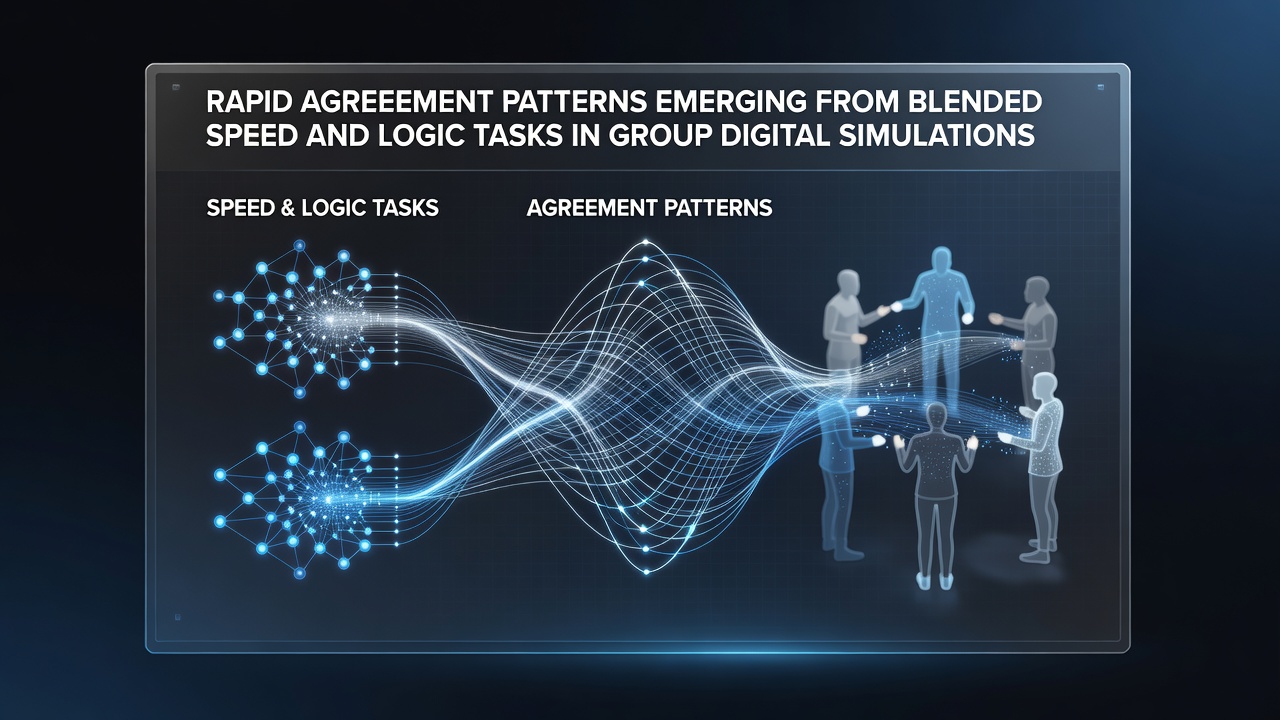
Rapid Agreement Patterns Emerging from Blended Speed and Logic Tasks in Group Digital Simulations
Digital simulations that combine rapid response requirements with structured logical challenges have drawn attention from researchers studying group dynamics in virtual settings, and patterns of quick consensus formation continue to surface across multiple platforms. These environments often place participants in scenarios where speed-based actions intersect with puzzle-like deductions, creating conditions that test both individual reflexes and collective reasoning. Data from various studies indicate that teams develop repeatable sequences for reaching agreement under these mixed demands, with timing and information sharing playing central roles in the process.
Defining the Simulation Framework
Group digital simulations typically present participants with layered objectives that demand simultaneous attention to movement timing and analytical problem solving, whereas traditional single-focus tasks separate these elements. Researchers at institutions across North America and Europe have documented how such blended formats alter standard collaboration rhythms, leading to compressed decision windows that favor certain agreement mechanisms over others. Evidence shows participants often default to abbreviated signaling systems, including visual cues or pre-established shorthand, to synchronize actions without lengthy verbal exchanges.
One study revealed that when logic components require verification of multiple variables while speed elements enforce strict completion deadlines, groups tend to establish informal roles early in sessions. These roles allow subsets of the team to handle verification steps while others manage execution, reducing overall negotiation time. Figures from collaborative platforms indicate average agreement cycles shorten by measurable margins once initial role assignments stabilize, though variations appear based on prior team familiarity.
Patterns Observed in Consensus Building
Observers note recurring sequences where teams first isolate the logical constraints before mapping them onto available speed actions, a process that repeats across different simulation scenarios. Data collected during controlled sessions demonstrate that successful groups allocate brief intervals for cross-checking assumptions immediately after each speed segment concludes, preventing cumulative errors from derailing later phases. This interleaving approach appears consistently in records from platforms supporting real-time multiplayer interactions.
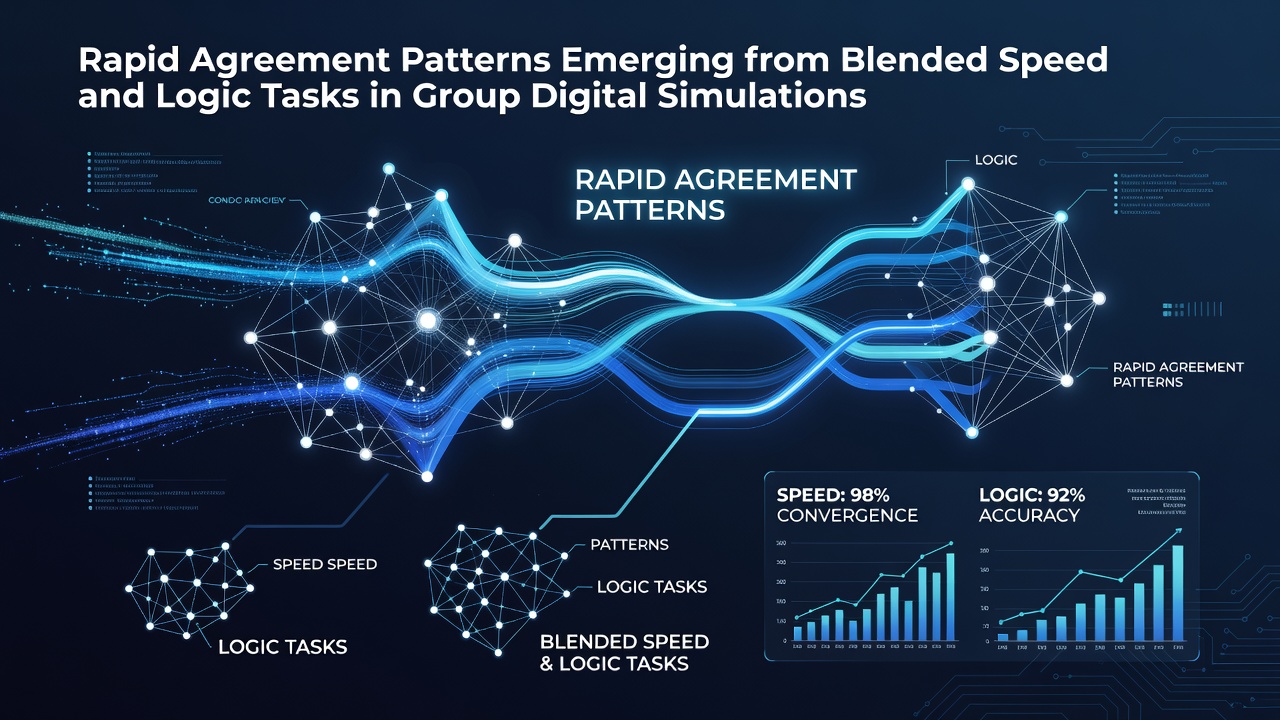
Patterns further include the emergence of designated check-in moments, where one member summarizes logical progress while others confirm alignment with the current speed requirement. Research indicates these checkpoints occur at predictable intervals tied to task phase transitions rather than fixed time markers. In July 2026, findings presented at an international digital collaboration symposium highlighted how such rhythmic check-ins correlate with higher completion rates across diverse participant groups drawn from academic and industry testing pools.
Influencing Variables and Data Trends
Multiple factors shape the speed of agreement, including interface design elements that display shared state information and the presence of persistent team histories. According to reports from the Australian Research Council, simulations incorporating transparent progress trackers reduce redundant confirmations by allowing members to reference common visual anchors. Additional analysis from Canadian academic sources shows that groups with repeated exposure to similar blended tasks refine their signaling vocabulary over successive sessions, leading to progressively shorter consensus intervals.
Quantitative records reveal that logic density within a given speed window directly impacts agreement latency, with higher complexity prompting more frequent micro-adjustments among participants. Yet these adjustments follow identifiable templates, such as sequential confirmation chains or parallel validation splits, rather than open-ended discussion. Evidence suggests interface latency and participant distribution across time zones also contribute measurable effects, though teams adapt protocols accordingly when provided with basic synchronization tools.
Design Considerations Emerging from Studies
Developers of group simulation tools have incorporated observations from these patterns into interface refinements, such as optional annotation layers that support rapid logical markup during active speed phases. Data from platform usage logs demonstrate that teams utilizing such features maintain tighter coordination without extending overall session durations. Broader examinations conducted by research networks in the European Union point to correlations between customizable cue systems and reduced instances of misaligned actions in blended task environments.
Continued monitoring of these simulations provides datasets that track how agreement patterns evolve as task parameters shift, offering baselines for comparing performance across varying group sizes and experience levels. Records compiled through 2026 continue to show stability in core sequences even as simulation complexity increases, suggesting underlying mechanisms remain consistent despite surface variations.
Conclusion
Studies of blended speed and logic tasks in group digital simulations establish clear documentation of rapid agreement patterns shaped by task structure, interface support, and repeated exposure. Information gathered across international research efforts outlines repeatable sequences that teams employ to align on both analytical and execution elements within constrained timeframes. These findings supply designers and analysts with concrete references for anticipating collaboration dynamics in similar virtual settings.