
Browser Platforms and Puzzle Integration in Real-Time Athletic Strategy Games
Browser platforms have developed capabilities that allow puzzle mechanics to influence decision points during live group athletic strategy sessions and these systems rely on web technologies such as WebSockets for synchronized updates alongside HTML5 canvas rendering for visual feedback. Players participate from standard web browsers without installations and the architecture supports multiple users contributing to collective choices that alter team positioning and tactical execution in simulated sports environments.
Core Mechanisms of Puzzle-Driven Decision Points
Developers integrate logic puzzles, pattern matching tasks, and spatial reasoning challenges directly into the flow of athletic simulations so that successful completion shifts variables like player speed, formation alignment, or resource allocation on the virtual pitch. Data from industry reports shows browser-based multiplayer frameworks handle thousands of concurrent sessions by distributing processing loads across client devices and central servers. Real-time synchronization occurs through continuous data packets that reflect puzzle resolutions as they happen and this setup keeps all participants aligned on the current state of the match.
According to figures from the Entertainment Software Association, browser gaming participation grew steadily through 2025 with particular gains in collaborative strategy titles that blend cognitive and physical elements. Those who study these platforms note that puzzle outcomes feed into athletic parameters without interrupting the pace because the game engine processes solutions in milliseconds and applies changes instantly across connected clients.
Technological Foundations Supporting Group Play
Web standards enable the necessary performance for group athletic scenarios where timing matters and researchers at various institutions have documented how JavaScript frameworks combined with WebAssembly deliver the computational efficiency required for complex calculations during live sessions. Puzzle elements appear as modular components that teams solve collectively and the results propagate to influence athletic variables such as interception probabilities or scoring opportunities. Observers note that this modular approach lets designers update individual puzzle types without rebuilding entire game structures and users benefit from seamless transitions between strategic planning phases and active play sequences.
Examples of Implementation in Athletic Contexts
One documented case involves platforms where participants solve sequence puzzles to determine optimal routes for virtual athletes during a match and the collective accuracy of those solutions determines whether a team gains an advantage in ball possession or defensive coverage. Another implementation uses spatial arrangement challenges that teams complete to adjust formations dynamically and data indicates higher engagement rates when puzzle difficulty scales with group size. In May 2026 several browser services introduced enhanced APIs that improved latency handling for international player groups and this update allowed smoother integration of puzzle results into ongoing athletic simulations across different time zones.
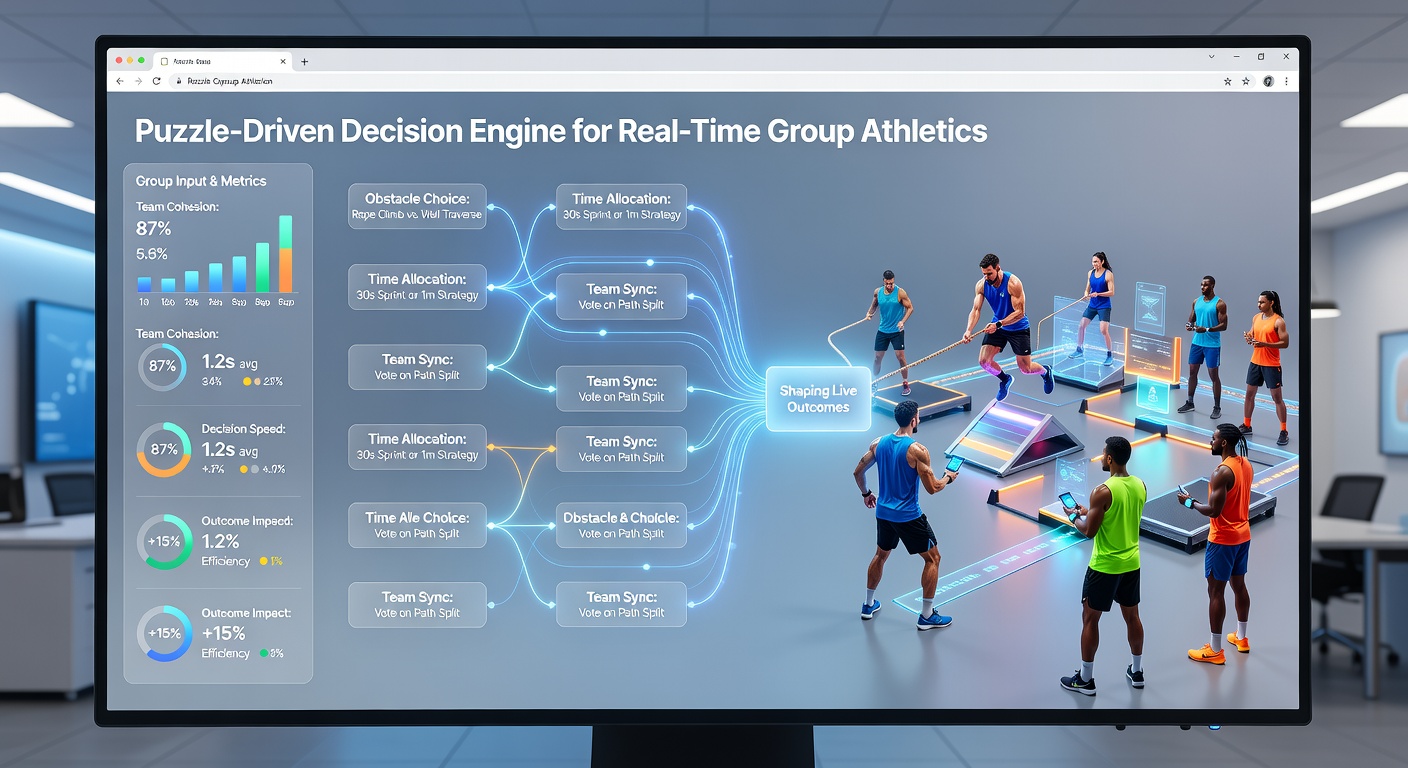
Studies from academic sources including those affiliated with Canadian research centers have examined how these decision points affect player retention and coordination metrics and the findings reveal measurable improvements in team communication when puzzle mechanics tie directly to athletic outcomes. The systems track individual contributions while maintaining overall group flow and this balance supports both casual participants and more dedicated strategy enthusiasts.
Current Trends and Platform Evolution
Browser accessibility continues to expand the reach of these hybrid experiences because users join sessions through any device with internet connectivity and recent advancements in progressive web applications have reduced load times for complex athletic environments. Puzzle-driven elements appear across various sports simulations including team-based field games and court scenarios where quick cognitive input alters physical execution parameters. Research indicates that the fusion of these elements creates layered decision trees that evolve throughout each match and participants adapt strategies based on both athletic skills and puzzle-solving proficiency.
Industry organizations have tracked the rise of zero-install multiplayer formats and their reports highlight increased development activity around real-time group interactions that reward coordinated puzzle resolution. Those who monitor platform updates note continued refinement of input handling systems that accommodate diverse user hardware while preserving the integrity of athletic timing mechanics.
Conclusion
Browser platforms have established reliable pathways for embedding puzzle-driven decision points into real-time group athletic strategy scenarios and the resulting experiences combine cognitive challenges with dynamic team coordination. Ongoing technological improvements support broader participation and more intricate integrations as development continues into 2026 and beyond.